
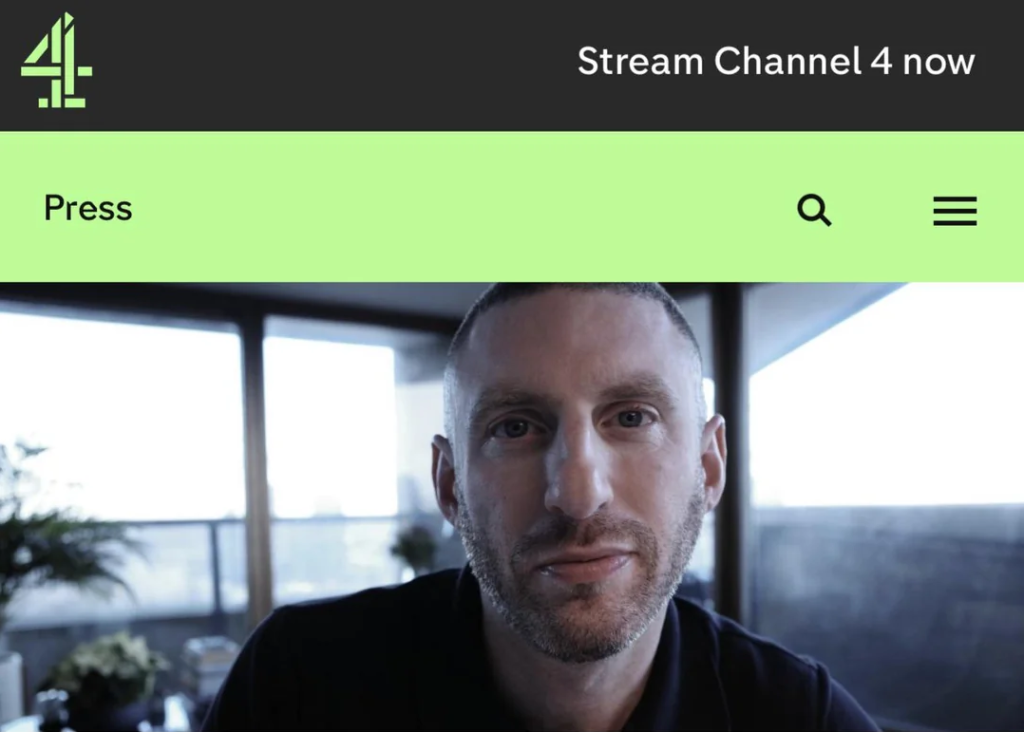
Channel 4’s The Great ADHD Myth?, broadcast on 18 August and fronted by NHS psychiatrist Dr Max Pemberton, sets out to ask whether ADHD is “really” a neurodevelopmental disorder or a product of modern life: phones, sugar, screens, and schools. It’s a question worth asking only if you’re prepared to engage honestly with the evidence. This programme wasn’t.
Pemberton opens by telling us the rise in ADHD diagnoses took him off guard, that ten years ago hardly anyone had it, and now loads of people do. What follows is a parade of contrarians presented as “some of the most respected experts in the field”, a single-child case study stretched far beyond what it can bear, and a series of claims that contradict not only the scientific literature but, remarkably, the programme itself.
Who counts as an expert?
The documentary’s central claim, that it is “not supported by evidence” that ADHD is a neurodevelopmental disorder and that ADHD brains are “not wired differently”, is attributed to a panel of experts. Look at who they are: a clinical psychologist known for opposing psychiatric diagnosis generally; a professor of health history; a former college president; a retired GP who tells us plainly that ADHD is “not a medical condition as far as she is concerned”. None of these people specialise in the condition they are on the show to deliberate on.
There are so many experts to choose from that they could have gotten on to provide some balance, but they chose not to – they chose to go completely one-sided.
Sami Timimi makes his familiar appearance, having argued since 2004 that ADHD is best understood as a cultural construct, a position rebutted at the time by Barkley and twenty co-authors, who described his critique as resting on “faulty logic, selective citation, misrepresentation of individual studies” and “ignorance of the vast literature on ADHD”.
What’s missing is the actual field. The 2021 World Federation of ADHD International Consensus Statement compiled 208 evidence-based conclusions from meta-analyses, endorsed by 80 authors across 27 countries, precisely to counter the misconceptions this programme recycles. Across dozens of twin studies, ADHD’s heritability averages around 74%, among the highest of any psychiatric condition. None of that made the edit. Instead, the one genuine specialist featured, brain-imaging expert Professor Katya Rubia, confirms that group-level brain differences exist (as the largest imaging mega-analysis to date also found). Professor Rubia calls it “tiny” differences, but it’s unclear whether she is only referring to her observations in her field of study with MRI, or whether that includes the differences found in multiple other types of imaging technology too. Either way, too little is still known as yet about ADHD, and it’s too complex, with too many variables to say that these ‘tiny’ differences are not sufficient to have an impact. Pemberton points out then, that there’s no marker, and you can’t diagnose ADHD from a brain scan.
This is the oldest trick in the anti-ADHD playbook. No, there is no single diagnostic biomarker. There is also no brain scan that diagnoses depression, anxiety, or migraine, and nobody uses that to argue migraines are a myth. The absence of a single distinguishing marker is not the absence of evidence; it’s the normal state of affairs for complex, heterogeneous conditions. Rubia’s point that changing behaviour changes the brain is true to some extent – but the key there is ‘to some extent’, it doesn’t mean you can change your brain to stop ADHD, and it doesn’t dissolve the well-replicated finding that these differences exist in the first place.
Straw men and the DSM
The programme’s handling of the diagnostic criteria was, frankly, embarrassing. Dr Iona Heath reads out DSM-5 items and asks, “who knows a child that always plays quietly?”, as if any child who doesn’t always play quietly would qualify for a diagnosis. That is not what the criteria say, it doesn’t suggest that children must always play quietly in order to not be ADHD, and it is not how diagnosis works. Timimi makes the same error moments later: a child who “often squirmed in his seat” would not be diagnosed with ADHD for that. Diagnosis requires multiple criteria, met persistently, across settings, at a severity that is considered to cause genuine impairment. “What is often?” he asks, as though this were a devastating gotcha. It’s answered easily: often enough that the child stands out for it, alongside everything else.
Pemberton himself concedes that these behaviours “exist on a spectrum of normal human variation”, apparently without noticing that this is precisely the point. Nobody has ever claimed ADHD traits are exclusive to people with ADHD. Diagnosis sits at the extreme end of that spectrum, where severity and persistence can create real challenges. Height exists on a spectrum too; that doesn’t make dwarfism or gigantism myths. If a programme’s contributors don’t understand the basic architecture of the diagnosis they’re attacking, why are they on the programme?
The programme contradicts itself
The environmental thesis gets its most confident airing from Professor Sam Wass, who says that if you sit a child in front of a screen, he can “100% guarantee” that when they come off it, any child will behave in a way consistent with ADHD. This is simply not true. Temporary post-screen restlessness is not the pervasive, persistent, cross-situational pattern of ADHD, and the meta-analytic evidence on media use and ADHD-related behaviours finds only a small correlation that cannot establish causation, and certainly cannot guarantee anything in “any child”. But set that aside, because the programme refutes itself. Dr Sanah Ahsan tells us we touch our phones nearly 2,500 times a day and that they are “attention-degrading machines stealing our focus”. Sure, while we’re using them. But the ADHD symptoms the programme itself documents are something else entirely. Ten-year-old Mason, the child at the heart of the film, describes having “too many thoughts” at an earlier age – presumably he didn’t even have a phone then, let alone be on at that much. This distraction is from internal noise, not from a device. He is describing symptoms that, anyone with ADHD recognises, and that those of us old enough to remember a time before devices still had to deal with.
What of the generations diagnosed before smartphones existed? I didn’t have a phone until I was sixteen, and it wasn’t a smart phone until my mid-twenties. There were no tablets, no streaming, and vastly fewer screens in my childhood, the childhood in which I was expelled from school and regularly arrested due to impulsive behaviours, and struggled with much else due to extreme issues of distraction compared to my peers. My ADHD did not wait for the iPhone to be invented. Neither did anyone else’s.
The Mason experiment
The programme’s emotional core is an experiment: take Mason off his medication and replace it with yoga, outdoor time, reduced screens, and dietary changes. Dr Sarah Warley frames medication as a last resort; sugar is implicated. Here again the programme confuses exacerbation with causation. The idea that sugar causes hyperactivity was tested in a meta-analysis of double-blind trials three decades ago and found wanting. Yes, screens and sugar can worsen symptoms, and reducing both is sensible advice for any child. It will not stop a child being ADHD, and the programme’s own footage proves it.
At week three, Pemberton announces that cutting screens has given Mason “the chance to improve his concentration”, over footage of him building Lego. How was concentration being measured? Was he unable to build Lego before? People with ADHD have always been able to focus intensely on things that interest them; the difficulty is sustaining attention on things that don’t. By week five, Mason’s school reports he is disengaged. Pemberton later repeats the improved-concentration claim over footage of Mason playing football, directly after the school’s report suggested the opposite, and Mason’s own teacher then says teaching him has been trickier, that on medication he could work independently and get on with his work. The narration and the evidence on screen are telling two different stories, and only one of them is sourced.
The end credits settle it. Two months later, Mason struggled at school, received poor exam results, and went back on his medication, after which his schooling improved. The experiment failed. A more honest programme would have explored what failure means: perhaps that Mason, like many of us, needed a different medication rather than none. I went through three different medications before finding one that worked for me. Mason’s observation that the pills take his “funness” away deserves to be taken seriously; it’s a real and common experience, and often a sign the medication or dose is wrong, not that the condition is imaginary. Instead, one child on one medication is asked to carry the weight of a national argument, and when the argument collapses, it’s relegated to a caption in the end credits.
The psychiatrist’s self-experiment
Pemberton, having paid £1,200 for a private online assessment that concluded he has ADHD, states that he doesn’t think he does (did he use his 25yrs as a psychiatrist to answer for a diagnosis, this is not shown) – but he tries ADHD medication anyway to see “how it feels”. He doesn’t like it. This is presented as revealing. It reveals nothing. Stimulant titration takes weeks; different medications, doses, and even times of day that it’s taken matter enormously; and the subjective experience of a single dose in a person who says they don’t have ADHD tells you precisely nothing about the therapeutic effect of a properly titrated regimen in a person with it. A psychiatrist knows this.
Meanwhile, Timimi warns that we have little idea of the long-term consequences of the medications. We have rather better ideas about the long-term consequences of undiagnosed, unmedicated ADHD. A systematic review of long-term outcomes found untreated ADHD associated with worse results across education, employment, driving, substance use, and antisocial behaviour, with treatment improving outcomes in most domains, and a Danish national cohort study in The Lancet found ADHD associated with roughly double the mortality rate, driven largely by accidents. Professor Matthew Smith’s observation that the rise in diagnoses correlates with the rising power of pharmaceutical companies is the kind of correlation you can draw for virtually every condition, mental or physical, over the same period. It proves exactly as much in each case.
The nature claims deserve a footnote too. Wass asserts there is “really good evidence” that short bursts of nature exposure “significantly reduce temporary symptoms of ADHD”, whatever “temporary symptoms” of a persistent condition are supposed to be. The evidence here is thin: small studies like the much-cited park walk experiment with seventeen children, plus correlational work confounded by the fact that people with ADHD may simply be less likely to seek diagnosis if they’re not dealing with rigid urban workplaces and busy societal systems in the first place. Speaking as a sample of one: I feel exactly as rushed in my mind on a forest walk as anywhere else.
Banning the label
Dr Heath says that if she were in charge, she would ban the label ADHD. I am glad she isn’t. Abolishing the label doesn’t abolish the labelling; it just restores the old ones: lazy, disruptive, naughty, disorganised, space cadet, troublemaker. We ran that experiment for decades. The evidence on what it does to children is not encouraging. The label is just a descriptor, and it’s needed.
Where the programme stumbles towards something true, it’s territory advocates have occupied for years. Yes, the education system needs overhauling to be genuinely inclusive, though that means range across interest areas, not just adding creative and sporting activities. Yes, as Dr Chris Bagley argues, there is something deeply uncomfortable about medicating children to fit a school system that isn’t working for them, just as there is about medicating adults to fit workplaces and systems that aren’t working for them. Mason’s mum is right to worry about dulling his sparkle to fit in with everyone else, even if that effect varies by person and by medication.
But this is precisely what the social model of disability has been saying all along, and it is not mutually exclusive with diagnosis. The only reason we need a diagnosis, or medication, or the word “disorder” at all, is the way our systems are built around a narrow band of neurotypes. The differences are real; the disability arises in the collision between those differences and an inflexible environment. The programme seems half-aware of this. It accepts that the differences exist, then insists the description of them is a myth. That isn’t scepticism. It’s incoherence.
Why this matters
I am neither pro- nor anti-medication. Whether medication helps depends on the person, the medication, and the situation, and it should always be an individual decision made with good clinical support. But a prime-time programme framing well-evidenced treatment as suspect will have consequences beyond the studio: parents frightened off assessments, adults deterred from seeking help, medication withheld from people who genuinely need it. Mason’s story, from struggle to failed experiment to poor results and back on medication with his schooling improved, was sitting right there in the programme’s own credits, quietly contradicting everything the preceding hour implied. That doesn’t mean the meds are the right choice for him, it does mean that it would be better to change the environment, and make it more accepting of difference instead -and the programme said as much, but that’s not going to happen overnight, and in the meantime we have to try to figure out the best options with what’s available, including for some people, medication… and the label!
The great ADHD myth isn’t ADHD. It’s the idea that you can settle a question science has already answered by assembling the handful of people who dislike the answer.
Update: 20th August 2026
The neuroscientist Katya Rubia, who was interviewed for Channel 4’s “The Great ADHD Myth?” on brain imaging, has spoken out about being misrepresented by the show:
“My interview was hours long and they cherry-picked the bits that suited their push for presenting ADHD as a myth,” Rubia told New Scientist. “Biased programs like this one that push their view of ADHD as a mythical entity are irresponsible and will have detrimental effects.”
Source: https://www.newscientist.com/article/2585608-calling-adhd-a-myth-is-pseudoscientific-and-dangerous/